
How to Extend the Life of Your AC System in Florida Blog Post
How to Extend the Life of Your AC System in Florida
Simple Maintenance Habits That Can Help Your Air Conditioner Last Longer
Most homeowners understand that a car needs regular maintenance.
You change the oil. You replace the filters. You rotate the tires. You take it to a mechanic every few thousand miles because you know that if you ignore maintenance, the car will eventually break down sooner than expected.
Your air-conditioning system is very similar.
An AC system is a machine. It has moving parts, electrical components, refrigerant, coils, filters, drain lines, ductwork, and airflow requirements. If the system is not maintained, it has to work harder. When it works harder for too long, it may lose efficiency, develop leaks, create moisture problems, and have a shorter service life.
In Florida, where air conditioners work almost year-round, AC maintenance is not optional. It is one of the most important things homeowners can do to protect the comfort, efficiency, and condition of the home.
Schedule Annual AC Maintenance
The best way to extend the life of your AC system is to have a licensed HVAC contractor perform regular maintenance, ideally at least once a year.
During this service, the contractor can evaluate the system, clean key components, check operation, inspect electrical connections, review the condensate drain, and verify that the system is operating within normal conditions.
Many homeowners wait until the AC stops cooling before they call a contractor. By that point, the system may already have been under stress for months.
Preventive maintenance is different.
The goal is to find small issues before they become expensive problems.
Check Refrigerant Pressure and System Performance
One of the most important items during AC maintenance is checking the refrigerant charge and system pressure.
If the AC is operating with low refrigerant, incorrect pressure, or poor system performance, the equipment may have to work harder than it should. That extra stress can reduce cooling efficiency, increase energy use, and shorten the life of the system.
Low refrigerant may also indicate a leak or another condition that should be evaluated by an HVAC contractor.
This is not something homeowners should guess or attempt to adjust themselves. Refrigerant work should be performed by a licensed HVAC professional with the proper tools and training.
Keep the Condensate Drain Line Clear
Your AC does more than cool the air. It also removes humidity.
As warm, humid air passes across the cold evaporator coil, condensation forms. That water has to drain away through the condensate drain line.
If the condensate line becomes clogged, water can back up and leak into the home. In some cases, a clogged condensate line can damage ceilings, walls, flooring, cabinets, or other building components.
Moisture can also create conditions where fungi growth may develop, especially when drywall, cabinets, insulation, or other porous materials stay wet.
That is why the condensate drain line should be checked and cleaned as part of routine AC maintenance.
Clean Coils Help the System Work Better
The evaporator coil is another important part of the AC system.
Because the AC is constantly moving air and removing humidity, dust and moisture can collect on the coil over time. When dust, dirt, moisture, and organic material build up, the system may lose efficiency and airflow may be reduced.
Dirty coils can make the AC work harder, reduce cooling performance, and contribute to indoor air quality concerns.
When needed, professional coil cleaning can help the system operate more efficiently. This should be done by an HVAC contractor using approved cleaning methods and products for that specific equipment.
Homeowners should not attempt to remove or chemically clean coils unless they are properly trained. The wrong cleaner or cleaning method can damage the equipment or create safety concerns.
Change Your Air Filter Regularly
One of the simplest things homeowners can do is change the air filter regularly.
Do not wait six months.
In many Florida homes, changing the filter every one to two months is a better habit, especially if the system runs frequently, the home has pets, the occupants have allergies, or there are indoor air quality concerns.
The air filter helps protect the AC system by reducing the amount of dust and debris that enters the equipment. It also helps capture particles from the air moving through the system.
A dirty filter can restrict airflow, make the AC work harder, reduce efficiency, and contribute to dirty coils.
Understanding MERV Ratings
Air filters have different ratings. One common rating is called MERV, which stands for Minimum Efficiency Reporting Value.
A higher MERV rating generally means the filter can capture smaller particles. However, a higher-rated filter can also restrict airflow if the AC system is not designed for it.
For many homes, a MERV 8 filter can be a reasonable basic option. If there are allergies, indoor air quality concerns, or mold concerns, some homeowners may consider a higher-rated filter, such as MERV 11 or MERV 13.
But this should be done carefully.
A filter that is too restrictive can reduce airflow and make the system work harder. Before switching to a high-MERV filter, it is a good idea to ask your HVAC contractor what your system can handle.
The goal is not just to install the strongest filter. The goal is to choose the right filter for your system and change it regularly.
Homeowner Maintenance for the Drain Line
Another simple maintenance habit is keeping the condensate drain line flowing properly.
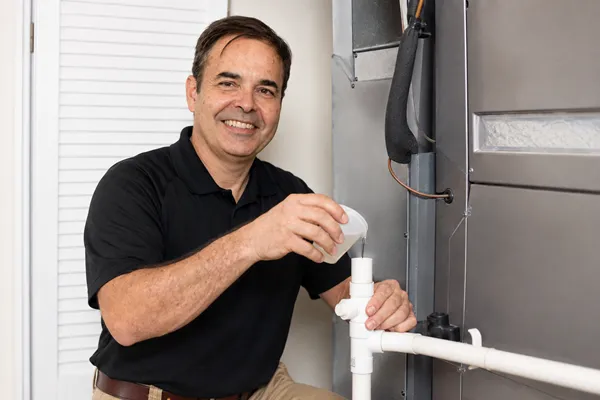
Some homeowners use vinegar or other approved drain-line maintenance methods every few months to help reduce algae buildup inside the condensate line. Before using any product, check with your HVAC contractor and follow the manufacturer’s recommendations.
Never mix chemicals.
Also, avoid pouring harsh chemicals into the system unless specifically recommended by a qualified professional. The goal is to keep the line clean and flowing, not damage the drain line, the air handler, or the surrounding components.
A clogged condensate line is one of the most common AC-related problems in Florida homes, and it can often be reduced with regular maintenance.
Why Moisture Matters
Moisture is one of the biggest concerns related to AC systems in Florida.
The AC removes humidity from the air, and that moisture has to be controlled. If the system is not draining properly, if coils are dirty, if ducts are sweating, or if airflow is restricted, moisture problems can develop.
Moisture around ducts, air handlers, ceilings, walls, or cabinets should not be ignored.
Dark staining around AC ducts, musty odors, condensation, water stains, or repeated AC drain line backups may indicate conditions that should be evaluated further.
If moisture affects porous materials, mold testing or mold assessment may be appropriate, especially when there are health-sensitive occupants, allergies, asthma, respiratory concerns, musty odors, or visible suspect fungal growth.
What About UV Lights?
Many homeowners ask about UV lights inside AC systems.
UV lights can be helpful in some situations, especially when installed properly inside the air handler to help reduce biological growth on coil surfaces.
But UV lights do not replace filtration.
A UV light does not physically remove dust, particles, or mold spores from the air. It may help treat certain surfaces or organisms exposed to the light, but particles still need to be captured and removed through proper filtration and regular maintenance.
That is why filter changes, coil cleaning, moisture control, and drain line maintenance are still important.
The best approach is not one single product. The best approach is a clean system, proper airflow, good filtration, controlled humidity, and regular professional maintenance.
Simple Steps That Can Make a Big Difference
If you want your AC system to last longer, focus on the basics.
Schedule annual HVAC maintenance.
Have the refrigerant charge and system pressure checked by a licensed HVAC contractor.
Keep the condensate drain line clear.
Clean the coils when needed.
Change the air filter every one to two months.
Use the right MERV filter for your system.
Pay attention to moisture, odors, stains, and condensation.
Do not ignore small AC problems.
Small maintenance habits can make a big difference over time.
Why This Matters During a Home Inspection
During a home inspection, we often see AC systems that are working but not well maintained.
The system may cool at the time of inspection, but there may be dirty filters, clogged drain lines, dirty coils, condensation concerns, damaged insulation, restricted airflow, or signs of past leakage.
These issues may not always mean the AC has failed, but they can tell an important story about maintenance and future risk.
A well-maintained AC system usually has a better chance of lasting longer, operating more efficiently, and creating fewer moisture-related problems inside the home.
The Real Takeaway
Your AC system works hard in Florida.
If you treat it like a machine that needs regular care, you can help extend its life, reduce moisture problems, improve comfort, and reduce the chance of unexpected breakdowns.
Annual professional maintenance, clean filters, a clear condensate line, clean coils, and proper airflow are some of the simplest ways to protect your system.
Do not wait until the AC stops cooling.
Maintenance is always easier than emergency repair.
Schedule Your Home Inspection
Buying a home in Orlando, Central Florida, Broward, or surrounding areas?
HouseMaster helps buyers better understand the condition of the home, including visible AC concerns, moisture conditions, drainage issues, and other important systems before closing.
Schedule your home inspection with HouseMaster today.
HouseMaster combines franchise-backed systems with owner-level accountability. Our operation is led by Cesar Costa, an engineer with an MBA, licensed home inspector, licensed mold assessor, Level II thermographer, licensed WDO pest control operator, FAA drone pilot, and real estate education provider.
About the Author Cesar Costa https://www.fl-housemaster.com/about-cesar-costa
Our contacts and online scheduling: https://fl-housemaster.com/contact
Our Main site https://fl-housemaster.com