What Is a Commercial Property Inspection?
What Is a Commercial Property Inspection?
How Commercial Inspections Help Buyers, Investors, and Property Owners Reduce Risk During Due Diligence
Buying a commercial property is very different from buying a house.
In most commercial transactions, the buyer has already reviewed the financials, studied the rent roll, analyzed the income, evaluated the location, considered the cap rate, and decided whether the deal makes sense on paper.
But financial underwriting is only part of the decision.
Before closing, the buyer also needs to understand the physical condition of the property.
That is where the commercial property inspection becomes important.
A commercial inspection is part of the due diligence process. The goal is to provide more information about the condition of the building’s key components, identify visible deferred maintenance, understand possible repair exposure, and help the buyer make a more informed decision before moving forward.
The inspection is not just about finding defects. It is about understanding building risk, repair priorities, and potential capital expenses before you buy, lease, refinance, or invest.
Commercial Inspections Are Part of Due Diligence
Before scheduling a commercial inspection, it is important to understand where you are in the due diligence process.
Commercial buyers usually begin by underwriting the property. They review the income, expenses, leases, vacancy, financing, market conditions, insurance, taxes, and potential return on investment.
Once the deal is moving forward, the commercial inspection helps answer a different question:
“What is the physical condition of the property, and what could create risk or significant repair costs after closing?”
This is especially important because commercial properties can have expensive systems. Roof replacement, commercial HVAC repairs, electrical upgrades, water intrusion, structural concerns, parking lot repairs, drainage issues, and safety deficiencies can create large unexpected expenses.
A commercial inspection helps the buyer better understand those conditions while there may still be time to negotiate, request additional information, budget repairs, or reconsider the deal.
A Commercial Inspection Is Often a Property Condition Assessment
In commercial real estate, the inspection is often referred to as a Property Condition Assessment, or PCA.
A PCA is different from a typical residential inspection because it is usually more business-oriented. The focus is not on every small defect. The focus is on the condition of major building systems, deferred maintenance, visible physical deficiencies, and items that could affect the property from a financial, operational, or safety standpoint.
Because commercial properties vary so much, the scope should be discussed before the inspection is scheduled.
A small retail strip, a 200-unit multifamily building, an office building, a medical center, a restaurant, a warehouse, and a shopping center do not need the exact same inspection approach.
The client and inspector should agree on what will be inspected, what will not be included, whether specialty consultants are needed, and what type of report is expected.
Why Scope of Work Matters
The most important word in commercial inspections is scope.
Unlike a standard residential home inspection, commercial inspections can be customized based on the property type, client needs, risk tolerance, time available, budget, and transaction purpose.
Some clients want a general visual inspection focused on major systems.
Other clients want a more detailed Property Condition Assessment with opinions of probable costs, capital planning, repair priorities, document review, interviews, and specialty consultants.
Some clients may want all units inspected in a multifamily building. Others may request a representative sample of units. Some may want roof access, infrared support, sewer camera inspection, mold testing, elevator contractor evaluation, or commercial HVAC specialist review.
That is why the inspection agreement and scope of work matter.
Before scheduling the inspection, the buyer should ask:
What systems will be inspected?
Will the roof be accessed?
Will electrical panels be opened?
Will HVAC equipment be operated or visually assessed only?
Will all units be inspected or only a sample?
Will parking lots, drainage, exterior lighting, stairs, railings, balconies, and safety items be included?
Will specialty consultants be needed?
Will estimated repair cost guidance be included?
What documentation should be provided before the inspection?
A clear scope helps avoid confusion and makes the final report more useful.
Building Recertification and Florida Due Diligence
In Florida, commercial buyers and condo buyers should pay close attention to building recertification, milestone inspections, and local requirements.
This is especially important for older commercial buildings, multifamily buildings, condo buildings, and properties in Miami-Dade, Broward, and coastal areas.
Depending on the jurisdiction and building type, older buildings may be required to complete structural and electrical recertification at certain age intervals. In Miami-Dade, buildings may become subject to recertification at 30 years for inland buildings, 25 years for coastal buildings, and every 10 years thereafter.
That matters during due diligence.
If a building is close to a required recertification deadline, the buyer should understand where the property stands in that process.
Was the recertification already completed?
Was the report accepted by the city?
Were deficiencies identified?
Were repairs required?
Were permits pulled?
Were repairs completed and closed?
Is a new recertification coming due soon?
If the building is only one year away from a major recertification deadline, it may be wise to discuss whether the process should be anticipated before closing. Once engineers identify deficiencies and a report is submitted to the city, the city may require repairs, permits, follow-up documentation, and additional review.
That can create significant cost, delay, and responsibility for the owner.
A commercial inspection does not replace a required engineering recertification, but it can help buyers identify visible concerns and decide whether additional engineering review is needed before closing.
Major Components Matter Most
Commercial inspections are usually focused on the key building components that can create the largest repair exposure.
This often includes the roof, structure, exterior, drainage, HVAC, plumbing, electrical, interior areas, safety items, parking areas, stairs, railings, balconies, and visible signs of deferred maintenance.
The inspection should help identify what appears to be in acceptable condition, what may require maintenance, what may need repair, and what may require further evaluation by a specialist.
The goal is to help the buyer understand the building as a business asset.
Roof Condition and Deferred Maintenance
The roof is often one of the most expensive systems in a commercial property.
A commercial roof can affect insurance, leasing, tenant satisfaction, interior damage, future capital expenses, and the buyer’s overall risk.
During a commercial inspection, roof evaluation may include visible roof covering condition, drainage, ponding water, roof penetrations, flashing, membrane damage, roof coatings, previous repairs, roof access limitations, and signs of leaks or deferred maintenance.
The buyer should also try to obtain roof history when available, including age, permits, maintenance records, warranty information, prior leak history, and repair invoices.
A roof that looks functional today may still have a significant capital expense approaching if it is near the end of its expected service life or has a history of repeated leaks.
HVAC and Mechanical Systems
Commercial HVAC systems can be expensive to repair and maintain.
Depending on the property, HVAC may include rooftop package units, split systems, cooling towers, chillers, make-up air units, exhaust systems, ventilation equipment, duct systems, and other specialized equipment.
A commercial inspection may evaluate visible equipment condition, age, operation when accessible, corrosion, leaks, damaged insulation, visible maintenance concerns, and evidence of deferred maintenance.
For more complex systems, a licensed HVAC contractor or mechanical specialist may be recommended as part of the scope.
This is especially important when the property has restaurants, medical uses, large offices, multifamily buildings, or specialized ventilation needs.
Electrical Systems and Infrared Support
Electrical systems are another major commercial inspection concern.
The scope should clarify whether electrical panels will be opened, whether major equipment will be reviewed, and whether infrared thermography will be used.
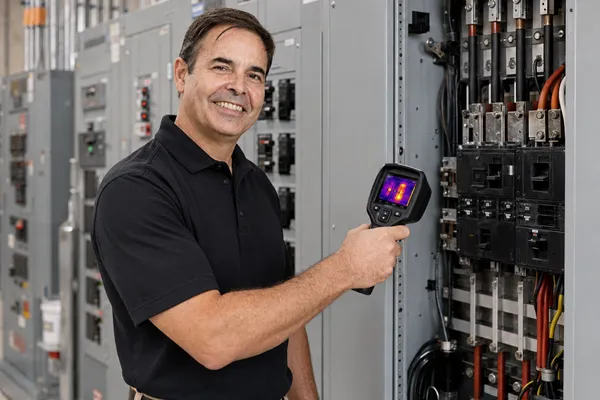
Infrared thermal imaging can be valuable because overheating electrical components may not be visible during a standard visual inspection. Thermal anomalies may be related to loose connections, overloaded circuits, unbalanced loads, aging components, corrosion, or other conditions that should be reviewed by a qualified electrical professional.
In larger buildings, especially where recertification or commercial electrical review is involved, infrared thermography can provide important documentation to support further evaluation and repair planning.
The buyer should understand whether infrared is included, whether it is optional, and whether the building conditions allow for meaningful thermal evaluation at the time of inspection.
Structure, Cracking, and Movement
Commercial inspections should also consider visible structural concerns.
This may include foundation areas, columns, beams, walls, floors, balconies, stairs, parking structures, exterior cracking, settlement indicators, structural movement, spalling, corrosion, and other visible signs of deterioration.
Not every crack is structural. But commercial buyers should pay attention to cracks, displacement, water intrusion, corrosion, concrete deterioration, balcony issues, or conditions that may suggest movement or deferred maintenance.
If significant structural concerns are observed, a licensed engineer should be consulted.
This is especially important for older buildings, coastal properties, concrete structures, multifamily buildings, and properties approaching recertification deadlines.
Moisture, Water Intrusion, and Mold Risk
Water intrusion is one of the most important issues in commercial buildings.
Roof leaks, window leaks, plumbing leaks, exterior wall leaks, poor drainage, HVAC condensation, and past water damage can all affect building materials.
When drywall, cabinets, insulation, ceiling materials, or other porous components stay wet, conditions may develop where fungi can grow.
During a commercial inspection, we look for visible signs of water intrusion, stains, damaged finishes, elevated moisture where accessible, odors, and conditions that may require correction.
If there is a musty smell, visible suspect fungal growth, prior mold history, active leaks, or elevated moisture concerns, mold assessment and air sampling may be recommended as an additional service.
A commercial inspection may identify moisture concerns, but mold testing and mold assessment are separate services and should be added when appropriate.
Drainage, Site Conditions, and Parking Areas
The exterior site can also create major problems.
Poor drainage can direct water toward the building, affect foundations, create erosion, damage pavement, and contribute to moisture intrusion.
Depending on the scope, the inspection may include grading, drainage, parking lots, sidewalks, curbs, pavers, trip hazards, exterior lighting, retaining walls, loading areas, and general site conditions.
Parking lot repairs can be expensive, especially when asphalt, concrete, drainage, striping, ADA access, or paver settlement is involved.
These items may not look as urgent as a roof leak or HVAC failure, but they can still affect operations, liability, and future repair costs.
Safety Items and Building Access
Commercial buildings involve occupants, employees, customers, tenants, vendors, and visitors.
That means safety-related conditions matter.
Depending on the scope, a commercial inspection may include visible safety concerns involving stairs, railings, guards, balconies, walking surfaces, exterior lighting, trip hazards, emergency lighting, alarms, exit signs, fire extinguishers, life-safety components, and general access conditions.
Some life-safety systems, fire alarms, elevators, sprinklers, generators, and specialized systems may require evaluation by licensed specialty contractors.
The important point is to identify what is included in the inspection and what should be reviewed separately.
Why Small Defects Are Usually Not the Focus
Commercial inspections are typically not designed to list every small issue inside the building.
A broken sink stopper, a minor appliance issue, a loose handle, a missing cabinet bumper, or a small cosmetic defect may not be the priority in a commercial due diligence inspection.
The focus is usually on material items, major systems, deferred maintenance, safety concerns, water intrusion, and potential repair costs that may affect the buyer’s decision.
Depending on the agreed scope, the inspection may focus on items above a certain practical threshold, such as repairs that may exceed several hundred dollars or more.
This keeps the report focused on the conditions that are most relevant to the transaction, the investment, and the future operation of the property.
Documents, Open Permits, and Code Notices
Commercial buyers should also understand that permit searches, code violation searches, tax records, utility bills, zoning review, lease review, environmental reports, title review, and open permit research may not be part of the commercial inspection unless specifically included in the scope.
These items are very important, but they are often handled separately by the buyer, title company, attorney, broker, city, engineer, or other due diligence professionals.
A buyer should consider checking:
Open permits
Closed permits
Code violations
Building recertification status
Fire department records
Utility bills
Maintenance records
Roof warranties
HVAC service contracts
Prior inspection reports
Tenant complaints
Insurance claims
Repair invoices
These records can reveal important information that may not be visible during the walk-through inspection.
For example, a building may look acceptable during a site visit but still have open permits, unresolved code violations, incomplete recertification repairs, or known maintenance problems.
The inspection is one part of due diligence. Document review is another.
Specialty Consultants May Be Needed
Commercial properties can be complex.
Depending on the building type and client needs, additional consultants may be recommended or required.
This may include a structural engineer, roofing contractor, HVAC contractor, electrical contractor, elevator contractor, fire alarm contractor, sprinkler contractor, plumber, mold assessor, environmental consultant, sewer camera specialist, thermographer, paving contractor, or accessibility consultant.
For example, if the building has elevators, an elevator contractor may be needed. If the building has specialized HVAC equipment, a mechanical contractor may be appropriate. If major electrical equipment is being evaluated, infrared thermography or an electrical contractor may be recommended. If water intrusion is suspected, mold testing or moisture mapping may be useful.
A good commercial inspection process helps identify when the general assessment is enough and when deeper specialty evaluation makes sense.
What Types of Commercial Properties Can Be Inspected?
Commercial inspections can apply to many types of buildings, including:
Retail plazas and strip centers
Small shopping centers
Large shopping centers
Office buildings
Medical offices
Professional buildings
Warehouses
Industrial buildings
Restaurants
Mixed-use buildings
Multifamily buildings
Condominium buildings
Apartment communities
Storage facilities
Religious buildings
Schools or daycares
Hospitality properties
Each property type has different risks, systems, and priorities. That is why the inspection scope should match the building.
HouseMaster Commercial Inspection Experience
HouseMaster Home Inspections has extensive experience with commercial property inspections in Florida and other markets.
Our team has inspected smaller shopping centers, strip plazas with 20 or 30 stores, multifamily buildings, large multifamily properties with up to 200 units, office buildings, medical centers, and other commercial properties.
We have also worked with engineering companies, especially in connection with building recertification, commercial thermography, and larger building evaluations.
That experience helps us understand what commercial buyers, property managers, investors, condo associations, and engineers need from an inspection process.
A commercial inspection should not overwhelm the client with irrelevant minor details. It should help identify key concerns, organize the findings clearly, and provide practical information that supports better decisions.
Why Choose HouseMaster for Commercial Inspections?
With HouseMaster, you get a team that understands both inspection process and real estate decision-making.
Our commercial inspection approach is built around practical due diligence, clear communication, and documentation that helps buyers, owners, and property professionals understand the condition of the building.
Depending on the scope, we can support commercial inspections with:
Commercial property condition assessments
Multifamily building inspections
Shopping center and retail plaza inspections
Office and medical building inspections
Infrared thermography
Moisture evaluation
Mold assessment and air sampling
Sewer camera scope
Drone roof documentation
WDO / termite inspection
Building recertification support
Coordination with engineering and specialty consultants when needed
Our goal is simple: help you understand the property, reduce risk, and make better decisions before closing or investing more money into the building.
The Real Takeaway
A commercial inspection is not just another item on the closing checklist.
It is a key part of due diligence.
The financials may tell you whether the deal works on paper, but the inspection helps you understand the condition of the building that supports those financials.
Roof condition, HVAC systems, electrical equipment, structure, drainage, moisture, safety concerns, parking areas, and deferred maintenance can all affect the true cost of ownership.
Before you close on a commercial property, make sure you understand the scope, the building condition, the recertification status, the possible need for specialty consultants, and the documentation that should be reviewed.
A good commercial inspection helps you move forward with more clarity and fewer surprises.
Commercial Property Inspections in Florida
HouseMaster provides commercial property inspections and property condition assessments for buyers, investors, property managers, condo associations, and building owners.
We serve commercial clients in South Florida, Central Florida, Orlando, Broward, Fort Lauderdale, Kissimmee, Clermont, Winter Garden, The Villages, and surrounding areas.
Frequently Asked Questions
What is a commercial property inspection?
A commercial property inspection is a visual assessment of a commercial building’s key systems and components. It is commonly used during due diligence to help buyers, investors, lenders, tenants, and owners understand the physical condition of the property.
Is a commercial inspection the same as a Property Condition Assessment?
In many cases, yes. A Property Condition Assessment, or PCA, is a common term used in commercial real estate to describe an inspection process focused on the condition of major building systems, deferred maintenance, and material physical deficiencies.
What is included in a commercial inspection?
The scope can vary, but it may include the roof, structure, exterior, drainage, parking areas, HVAC, plumbing, electrical, interior areas, safety concerns, balconies, stairs, railings, and visible deferred maintenance.
Are open permits and code violations included?
Not usually, unless specifically included in the scope. Permit searches, code violation research, zoning, tax records, utility bills, title review, and legal due diligence are often handled separately by the buyer, title agent, attorney, broker, city, or other professionals.
Are elevators included in a commercial inspection?
Elevators are usually outside the scope of a general commercial inspection and may require evaluation by an elevator contractor or licensed specialist.
Is infrared thermography included?
Infrared thermography may be included or added depending on the scope. It can be valuable for evaluating commercial electrical systems, moisture concerns, and building performance conditions when appropriate.
Should I check building recertification before buying?
Yes. In Florida, especially in Miami-Dade, Broward, and coastal areas, buyers should understand whether the building is subject to recertification, whether the report has been completed, and whether repairs or permits are still pending.
Can a commercial inspection estimate repair costs?
Depending on the scope, the report may include general repair cost guidance or may recommend obtaining estimates from contractors or specialty consultants. Commercial repair costs can vary significantly based on building size, access, materials, urgency, and scope of repair.
When should I schedule a commercial inspection?
Schedule the commercial inspection during the due diligence period, after the deal is far enough along to justify the cost but early enough to allow time for review, additional specialty inspections, negotiation, or further documentation requests.
📞 Schedule your Inspection
Buying a Comercial Property in Orlando, Central Florida, Broward, or South Florida?
Schedule your inspection with HouseMaster today.
Call 407-343-4677 for Central Florida or 954-900-6056 for South Florida.
HouseMaster combines franchise-backed systems with owner-level accountability. Our operation is led by Cesar Costa, an engineer with an MBA, licensed home inspector, licensed mold assessor, Level II thermographer, licensed WDO pest control operator, FAA drone pilot, and real estate education provider.
About the Author Cesar Costa https://www.fl-housemaster.com/about-cesar-costa
Our contacts and online scheduling: https://fl-housemaster.com/contact
Our Main site https://fl-housemaster.com