
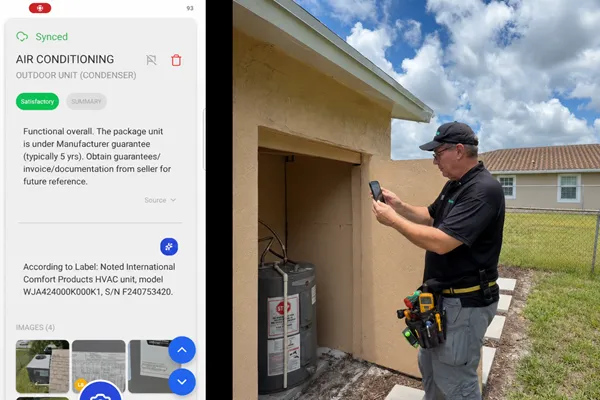
AI Home Inspection Reports: How Technology Is Changing Home Inspections
AI Home Inspection Reports: How Technology Is Changing Home Inspections
Faster Reports, Clearer Findings, and Better Decisions for Buyers
Home inspections are changing.
For many years, the inspection process followed the same basic pattern: the inspector walked through the home, took notes, collected photos, went back to the office, wrote the report, organized the findings, and delivered the final document later.
That process worked, but it had limitations.
It often meant slower reports, less time explaining findings on-site, more typing after the inspection, and a static PDF that buyers and agents had to manually sort through during the negotiation period.
Artificial intelligence is changing that process.
At HouseMaster, we use AI-powered inspection reporting to help organize findings faster, support clearer communication, and give buyers and agents a more useful report experience.
The goal is not to replace the inspector.
The goal is to make the inspector more efficient, more focused, and better able to explain what matters most.
AI Does Not Replace the Inspector
A home inspection still depends on the inspector’s training, experience, judgment, and ability to understand the property.
AI cannot walk the roof. AI cannot enter the attic. AI cannot test outlets, evaluate moisture concerns, review drainage, inspect HVAC equipment, check plumbing, or explain findings to a buyer standing inside the home.
The inspector is still the professional making the observations and decisions.
AI helps with the process around the inspection. It helps organize photos, comments, ratings, summaries, and report language more efficiently so the inspector can spend more time evaluating the home and communicating clearly.
That distinction matters.
The best use of AI in home inspections is not replacing human judgment. It is supporting it.
The Old Way Wastes Time Inside the Software
Today, many inspection software systems still require inspectors to work inside a rigid menu structure while they are inspecting the property.
For example, if the inspector is outside and sees a gutter issue, the comment may need to be entered under the roof section. A few minutes later, the inspector may see the air conditioning compressor, which belongs under the HVAC section. Then the inspector may find a plumbing shutoff valve, which belongs under the plumbing section.
That means the inspector is constantly jumping between categories, sections, sub-sections, photos, comments, ratings, and summary items.
A lot of time is wasted navigating the software instead of staying fully focused on the house.
Newer AI-native inspection platforms, such as InspectionX, are changing that process. Instead of forcing the inspector to constantly click through a hierarchy, the inspector can speak the finding naturally. Advanced AI recognition can understand technical inspection language, identify the component being discussed, organize the finding into the correct report section, place the photos where they belong, suggest appropriate ratings, and support more precise estimated repair cost guidance.
This is a major shift.
The inspector is no longer spending as much mental energy thinking, “Where do I enter this?” The inspector can stay focused on what matters most: observing the property, documenting conditions, explaining findings, and reducing the chance of missed information.
That time savings matters because inspection quality is not only about how fast a report is delivered. It is about giving the inspector more attention to use in the field. When the reporting process becomes faster and more intelligent, the inspector can spend more time inspecting, make fewer reporting mistakes, and provide clearer, more accurate information to the home buyer.Faster Reporting During the Inspection
One of the biggest advantages of AI-powered reporting is speed.
Traditional inspection reports often require significant writing time after the inspection. That can delay delivery and reduce the time available for the buyer to ask questions during the inspection period.
With AI-supported reporting, many findings can be organized in real time while the inspection is happening.
Photos, comments, recommendations, and summary items can be built into the report during the inspection process, helping reduce the amount of time needed after the inspection is complete.
This allows the buyer to receive information faster and helps the agent move forward with less delay.
In a real estate transaction, speed matters.
More Time for Explanation, Less Time Typing
The value of a home inspection is not just the report.
The real value is helping the buyer understand the home.
When an inspector spends less time buried in typing and report formatting, there is more time to evaluate the property, explain findings, answer questions, and help the buyer understand priorities.
That is especially important for first-time buyers, out-of-state buyers, investors, and relocation clients who may not be familiar with Florida construction, insurance concerns, termite risk, mold concerns, pool systems, sewer lines, or wind mitigation requirements.
AI helps make the reporting process more efficient so the inspection can become more educational and less transactional.
Better Organization of Findings
A good inspection report should not feel like a confusing list of problems.
Buyers need to understand what matters most, what may be routine maintenance, what may affect safety, what may affect insurance, and what may need further evaluation.
AI-powered reporting helps organize findings into clearer categories, summaries, and structured comments.
This makes the report easier to read and easier to use.
Instead of forcing buyers to scroll through a long PDF trying to figure out what matters, the information can be organized in a way that supports better decision-making.
Not Just a Static PDF
One of the most important changes in modern home inspection reporting is the move from a static report to a dynamic report experience.
A PDF is still important. Buyers, agents, lenders, and insurance companies often need a professional document they can save, print, and share.
But a static PDF has limits.
With a dynamic report, buyers and agents can interact with the findings in a more useful way.
They can filter the report by repair cost, inspection rating, summary items, and other categories. They can quickly focus on the findings that matter most to them instead of manually searching through pages of information.
This is a major advantage during the inspection period.
Create Your Own Repair List
One of the most practical applications of AI-powered and dynamic reporting is the ability to create a selected repair list.
Traditionally, buyers and agents had to copy and paste items from the inspection report into an email, addendum, or repair request. That process could be time-consuming and confusing, especially when the report included many photos, comments, and categories.
A dynamic inspection report gives buyers and agents more control.
They can review the findings, select the items they want to discuss, and create a repair list based on the inspection results.
This does not mean every finding should become a repair request. It means buyers and agents have a better tool to organize the information and decide what matters most for the transaction.
That creates more speed, more control, and clearer negotiations.
Estimated Repair Cost Guidance
Another powerful application of modern inspection reporting is estimated repair cost guidance.
A report that simply says something is defective may not give the buyer enough context.
A $300 repair and a $5,000 repair should not feel the same.
At HouseMaster, estimated repair cost guidance is adjusted case by case by our inspectors based on the actual finding, visible condition, and practical inspection experience. These are not contractor quotes, but they provide helpful context so buyers and agents can better understand priorities.
This helps buyers separate minor maintenance items from findings that may have a larger financial impact.
Better Support for Agents
AI-powered reporting is not only helpful for buyers.
It also helps real estate agents.
Agents need clear information quickly. They need to understand what was found, what matters most, and how to help their client make decisions during a short inspection period.
A dynamic report can help agents filter findings, review summary items, organize repair requests, and support negotiations with less confusion.
Instead of spending hours trying to interpret a long report, agents can focus on helping the buyer decide what to ask for, what to accept, and what may require further evaluation.
That is a better experience for everyone involved.
Better Support for Buyers
For buyers, the biggest benefit is clarity.
Buying a home can be stressful. The inspection report can feel overwhelming, especially when the buyer sees many comments, photos, maintenance items, and recommendations all at once.
AI-powered reporting helps present the information in a more organized way.
The buyer can understand the key findings faster, review supporting photos, filter the report, ask better questions, and create a more useful repair list.
That means the buyer is not just receiving information.
They are receiving information they can actually use.
AI Helps With Consistency
Another advantage of AI-supported inspection reporting is consistency.
A home inspection company with multiple inspectors needs consistent language, consistent report structure, and consistent communication standards.
AI-supported reporting can help organize findings in a similar format, reduce report-writing variation, and make the final report easier to review.
The inspector still makes the judgment. But the reporting process becomes more structured.
That helps buyers, agents, and the inspection team stay aligned.
AI and Advanced Inspection Tools Work Together
AI is only one part of the inspection process.
The quality of the inspection still depends on the inspector, the training, and the tools used in the field.
At HouseMaster, AI-powered reporting works together with professional inspection tools such as moisture meters, infrared cameras, sewer cameras, pool leak detection equipment, drones, and other specialized equipment when appropriate.
The tools help gather better information.
The inspector interprets the findings.
The AI-supported report helps organize and communicate the results.
That combination creates a stronger inspection experience than a basic walkthrough and a static report.
AI Helps, But It Does Not Remove Limitations
It is also important to be honest.
AI does not remove the limitations of a home inspection.
A home inspection is still based on visible and accessible conditions at the time of inspection. Inspectors cannot see behind finished walls, under floors, inside sealed systems, or predict every future failure.
AI does not change that.
What AI can do is help document what was found more clearly, organize the report more effectively, and make the findings easier to understand and use.
That is where the real value is.
The HouseMaster Difference
At HouseMaster, we use AI to improve the inspection experience, not to replace the inspector.
Our goal is to help buyers receive better information faster.
With our AI-powered inspection process, buyers can receive a summary at the inspection, a professional PDF report, a dynamic report experience, estimated repair cost guidance, and the ability to create a selected repair list based on the findings.
This helps buyers make decisions with more confidence and helps agents move faster during the inspection period.
We also provide access to additional inspection services when needed, including WDO inspections, mold assessment, infrared, sewer scope, pool inspection, pool leak detection, 4-point inspections, wind mitigation, and drone-supported roof documentation.
That means the buyer is not just getting a report.
They are getting a more complete inspection experience.
The Future of Home Inspections
The future of home inspections is not a robot replacing the inspector.
The future is a better inspector supported by better tools.
AI can help reduce reporting time, improve organization, support consistency, create dynamic repair lists, and make inspection findings easier for buyers and agents to use.
But the most important part of the inspection remains the same: a trained professional evaluating the home, explaining the findings, and helping the buyer understand the property.
Technology should make that process better.
That is exactly how HouseMaster uses AI.
AI Home Inspections Reports in Broward
We provide licensed termite (WDO) treatment, including:
Fort Lauderdale & Wilton Manors
Hollywood & Dania Beach
Hallandale Beach & Aventura
Pembroke Pines & Miramar
Weston & Parkland
Davie & Southwest Ranches
Cooper City & Plantation
Sunrise & Tamarac
Coral Springs & Coconut Creek
Lighthouse Point & Lauderdale-by-the-Sea
Margate & North Lauderdale
Deerfield Beach & Pompano Beach
AI Home Inspections Reports in Orlando
Kissimmee & ChampionsGate
St. Cloud & Davenport
Lake Mary & Sanford
Oviedo & Waterford Lakes
The Villages & Leesburg
Clermont & Minneola
Mount Dora & Eustis
Winter Garden & Celebration
Winter Park & Maitland
Altamonte Springs & Longwood
Schedule Your Inspection
Buying a home in Orlando, Central Florida, Broward, or South Florida?
Schedule your inspection with HouseMaster today.
Call 407-343-4677 for Central Florida or 954-900-6056 for South Florida, or book online.
HouseMaster combines franchise-backed systems with owner-level accountability. Our operation is led by Cesar Costa, an engineer with an MBA, licensed home inspector, licensed mold assessor, Level II thermographer, licensed WDO pest control operator, FAA drone pilot, and real estate education provider.
About the Author Cesar Costa https://www.fl-housemaster.com/about-cesar-costa
Cour contacts and online scheduling: https://fl-housemaster.com/contact
Our Termite site https://fl-housemaster.com/wdo-pageSchedule an AI-Powered Home Inspection