
What Makes a Good Thermography Report? | Miami-Dade Recertification
What Makes a Good Thermography Report?
Why Not All Electrical Thermography Reports Are the Same
Not all thermography reports are created equal.
For building recertification, commercial electrical evaluation, and property risk management, the quality of the report matters as much as the thermal scan itself.
A low-cost thermography report may look acceptable at first glance because it includes thermal images and a few comments. But if the report is not properly structured, not ready for electronic submission, not clear for engineer review, or not supported by actual thermal image analysis, it can create delays, confusion, and frustration.
In some cases, the building owner may end up paying twice because the first report was not useful for the recertification process or get rejected.
A good thermography report should do more than show colorful pictures. It should document the scope, explain the procedure, identify the equipment inspected (inventory), analyze thermal anomalies, classify severity, provide clear recommendations, and be formatted in a way that supports the engineer, property manager, board, electrician, and local review process.
A Good Thermography Report Starts With the Purpose
The first question is simple: What is the thermography report being used for?
For Miami-Dade building recertification, electrical infrared thermography may be required for electrical systems operating at 400 amperes or greater. In that context, the report is not just a maintenance document. It becomes part of a larger recertification package reviewed by engineers, property managers, building officials, electricians, and sometimes condo boards or commercial owners.
That means the report must be prepared with the end use in mind.
A thermography report for recertification should be clear, organized, technically defensible, and easy to review. It should help the engineer understand what was inspected, what was found, what deficiencies were identified, and what next steps may be required.
If the report is only a collection of thermal pictures without explanation, it may not provide enough information to support the process.
The Report Must Be Ready for Electronic Submission
One of the most common problems with low-quality thermography reports is that they are not prepared for the actual approval process.
In Miami-Dade and City of Miami recertification work, documents are often submitted electronically. That means the report must be properly formatted, named, signed, sealed, and prepared according to the requirements of the jurisdiction and the design professional responsible for the recertification package.
A report that is not ready for electronic acceptance can create unnecessary delays.
A proper thermography report should be organized as a professional PDF, compatible with the electronic submission process, and prepared so it can be included in the electrical recertification package or submitted as a separate thermography report when appropriate.
This matters because a scanned image, a locked file, a password-protected file, or a document that does not follow the required workflow may create problems during review.
The thermography provider should understand the difference between a report that “looks finished” and a report that is actually ready to support the recertification process.
Digital Signature Requirements Matter
Electronic signatures are not just a visual signature pasted onto a PDF.
For engineering and recertification documents, a proper digital signature is part of the document-control process. It helps verify the identity of the professional, protect the integrity of the file, and show whether the document has been changed after signing.
This is especially important when reports are submitted electronically.
A professional thermography report should be prepared in a way that supports the engineer’s digital signing and sealing workflow. If the report is part of a recertification package, the design professional must be able to include it properly, validate it, and submit it through the required channels.
This is one of the reasons very cheap reports can create problems.
The report may include thermal images, but if it is not formatted correctly or does not support the required submittal process, the owner, property manager, or engineer may have to go back and request revisions before the report can be used.
A Clear Cover Page and Conclusion Are Essential
A good thermography report should not make the reviewer search through dozens of pages to understand the result.
The cover or first pages should include a clear conclusion.
The reviewer should quickly understand:
Was the inspection completed?
What building or electrical equipment was inspected?
Were reportable thermal anomalies found?
Were deficiencies identified?
What items require electrician review or repair?
Are there limitations that affected the inspection?
Was follow-up recommended after repairs?
This is especially important for city officials, engineers, property managers, and condo boards who need to understand the result quickly.
Some reports simply provide thermal images without a clear conclusion, deficiency summary, or classification. That creates confusion. The person reading the report may not know whether the thermography portion was acceptable, whether there are unresolved issues, or what action should be taken next.
A strong report should make the conclusion easy to find.
A Good Report Explains the Testing Procedure
The report should explain how the inspection was performed.
This may include the date of inspection, building information, weather or environmental conditions when relevant, areas inspected, equipment reviewed, access limitations, and whether equipment was operating under load at the time of the inspection.
Thermography is not magic. It depends on conditions.
The equipment must be energized. The system should ideally be operating under representative load. The thermographer must understand distance, focus, emissivity, reflected temperature, angle, environmental conditions, and how temperature differences should be interpreted.
If the report does not explain the inspection procedure, the reader has no way to understand how reliable or complete the inspection was.
A professional report should describe the process clearly enough that an engineer, electrician, property manager, or building owner can understand how the conclusions were reached.
The Report Should Define Assumptions and Limitations
Every thermography inspection has limitations.
Electrical equipment may be inaccessible. Covers may not be removed due to safety or access conditions. Some components may not be under sufficient load. Some panels may be blocked. Some rooms may be locked. Some equipment may be off at the time of inspection. Certain conditions may not be visible or measurable.
A good report does not hide these limitations.
It explains them.
The report should make clear what was inspected, what was not inspected, what assumptions were used, and what conditions could affect interpretation.
This protects the building owner, the engineer, the thermographer, and the property manager because everyone understands the scope of the service.
A report without exclusions, disclaimers, and limitations can create unrealistic expectations and misunderstandings.
A Good Report Includes a List of Equipment Inspected
A professional thermography report should include a clear list of equipment inspected.
This is one of the most important differences between a useful report and a confusing report.
The report should identify the electrical rooms, switchgear, switchboards, distribution panels, panelboards, disconnects, transformers, transfer switches, control panels, meter centers, busways, gutters, junction boxes, and other equipment that was inspected when applicable.
Without an equipment list, the reader may not know what was actually included in the scope.
This becomes a problem when there are many electrical rooms, multiple buildings, multiple service areas, or several panels with similar names.
A good report creates an inspection trail. It helps the engineer, electrician, property manager, and building owner understand what was reviewed and where each finding belongs.
Thermal Images Should Be Analyzed, Not Just Pasted Into a Report
One of the biggest differences between a professional thermography report and a low-quality report is the image analysis.
A report that simply copies thermal pictures into a Word file or PDF is not enough.
A proper thermography report should analyze each relevant thermal image using professional radiometric analysis software. This allows the thermographer to study the image, identify critical points, compare temperature differences, review reference areas, and document how the temperature differential was calculated.
The report should not only say, “This breaker is hot.”
It should explain the temperature observed, the reference temperature, the temperature difference, the likely severity category, the affected component, and the recommended next step.
A good report should include both the thermal image and the corresponding visual image so the reader can identify the exact equipment and component being discussed.
Without this analysis, the report may look like a thermography report, but it is not providing the technical information needed to support decision-making.
Temperature Difference and Severity Classification Matter
Temperature alone does not tell the full story.
A component may appear hot, but the real question is whether it is abnormally hot compared with similar components, ambient conditions, load conditions, equipment rating, or expected operating temperature.
That is why a good thermography report should explain how temperature differences are interpreted.
The report should include a severity classification table or rating system. It should explain what criteria are used to classify findings, what temperature rise standards or reference methods are being applied, and how recommendations are assigned.
For example, the report may classify findings as low, moderate, serious, or critical based on temperature difference, component type, operating conditions, safety concern, and the need for electrician review.
Without a severity table, the client may see a thermal image and not understand whether the finding is minor, urgent, or potentially serious.
A strong report should help the reader understand the level of concern and the recommended action.
Recommendations Should Be Clear and Practical
A good report should not stop at identifying a thermal anomaly.
It should provide a practical recommendation.
The report should explain whether the condition should be reviewed by a qualified electrical contractor, repaired, monitored, cleaned, tightened, load-tested, balanced, or re-inspected after corrective action.
The recommendation should be specific enough to guide next steps without pretending to replace the electrician or engineer.
The thermography report should not overstate the finding. It should not claim more than the inspection supports. But it should be clear enough that the owner and property manager know what to do next.
A vague report creates confusion. A clear report helps move the project forward.
A Good Report Includes Risk Analysis
A thermography report should help the client understand why the finding matters.
Electrical thermal anomalies may be associated with loose connections, overloaded circuits, unbalanced loads, corrosion, damaged components, aging equipment, poor contact, or other conditions requiring review.
The report should explain that these conditions can affect reliability, safety, maintenance planning, and the risk of equipment failure.
This is especially important in commercial buildings, condo associations, multifamily buildings, shopping centers, and buildings under recertification deadlines.
The report should support risk reduction, not create unnecessary panic.
The best reports explain the concern in a professional and practical way.
Camera Quality and Calibration Matter
Not all thermal cameras are the same.
A professional electrical thermography inspection should use a high-quality infrared camera with adequate resolution, thermal sensitivity, focus capability, and measurement accuracy for electrical inspection work.
Low-quality cameras, phone attachments, and entry-level devices may produce images that look impressive but do not provide the level of measurement detail needed for professional electrical evaluation.
A good report should identify the camera used, and when applicable, document calibration information, camera settings, and measurement conditions.
Poor-quality thermal images can miss important details or create misleading conclusions.
In electrical thermography, image quality is not cosmetic. It directly affects the usefulness of the inspection.
Thermography Requires Training and Judgment
The camera does not make the thermographer.
Thermography requires training, field experience, and technical judgment.
A professional thermographer must understand electrical systems, load conditions, thermal patterns, reflections, emissivity, false positives, equipment operation, and how to interpret temperature differences properly.
This is very different from simply buying a camera and taking pictures.
The best thermography reports are prepared by professionals who understand both the equipment and the building context. For electrical thermography, an engineering background and experience with commercial electrical systems can make a significant difference in how findings are identified, classified, and explained.
A report prepared without proper training may miss important issues, overstate minor findings, or provide information that is not useful for the engineer or building owner.
Why Cheap Thermography Can Become Expensive
When one company charges significantly less than another, it is important to ask what is included.
A low-cost thermography service may not include professional image analysis, proper report formatting, equipment list documentation, severity classification, electronic submission readiness, visual image pairing, clear recommendations, or support for engineer review.
That can make the report less useful.
In the worst cases, the owner may have to order the inspection again because the first report was not accepted, not clear, or not technically sufficient.
The cost difference is often not just about price. It reflects time, equipment, training, software, analysis, reporting quality, insurance, and experience.
A cheap thermography report may save money upfront, but it may cost more if it causes delays, confusion, or repeat work.
What to Ask Before Hiring a Thermography Company
Before hiring a company for electrical thermography or building recertification support, ask these questions:
Will the report be ready for electronic submission or engineer review?
Will the report include a clear conclusion and deficiency summary?
Will the equipment inspected be listed?
Will the report include both thermal and visual images?
Will each finding include temperature analysis and reference comparison?
Will severity ratings be explained?
Will the report include recommendations for next steps?
Will the inspection procedure and limitations be documented?
What camera will be used?
Is the camera professional-grade and calibrated?
Will professional analysis software be used?
Who will perform the inspection?
What level of thermography certification does the inspector have?
Does the company understand Miami-Dade or City of Miami recertification requirements?
If the provider cannot answer these questions clearly, the report may not provide the value you need.
What a Good Thermography Report Should Include
A high-quality electrical thermography report should include:
A clear cover page
Building and client information
Purpose of the inspection
Scope of work
Inspection procedure
Date and conditions
List of equipment inspected
Limitations and exclusions
Camera information
Thermal and visual images
Asset identification
Temperature readings
Reference temperature comparison
Delta T or temperature differential
Severity classification
Risk explanation
Recommendations
Deficiency summary
Clear conclusion
Report-ready PDF format
Support for engineer review or recertification submittal when applicable
This is what separates a true thermography report from a document that simply contains thermal pictures.
The Real Takeaway
Not all thermography reports are the same.
A good thermography report is not just a colorful image package. It is a technical document that supports building recertification, electrical maintenance, risk reduction, engineer review, and decision-making.
The report should be clear, structured, analyzed, properly formatted, and supported by professional equipment, trained interpretation, and practical recommendations.
If you are hiring a thermography company only based on the lowest price, you may not be comparing the same service.
A report that is not acceptance-ready, not properly analyzed, or not useful for the engineer can create delays and additional cost.
A professional report should help you move forward with confidence.
Schedule Level II Thermography in Miami-Dade and South Florida
Thermography Experts provides Level II electrical thermography for building recertification, commercial properties, condominium associations, property managers, engineers, and building owners throughout Miami-Dade, Broward, Palm Beach, and surrounding South Florida areas.
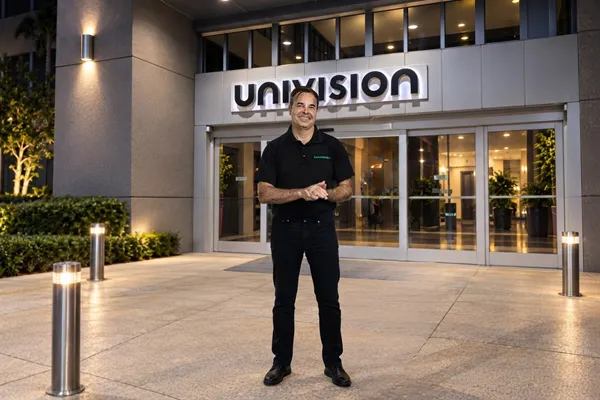
Our team is trusted by leading engineering firms in South Florida, including Florida Engineering and Greg Batista Engineering, as well as demanding commercial clients such as Univision. In environments like Univision’s 24/7 broadcast operations, inspections must be performed with exceptional care because critical systems cannot be interrupted and breakers cannot simply be tripped during testing. Their engineering teams include highly experienced professionals, including PhD-level engineers, which reflects the level of technical scrutiny our work is expected to meet.
Our reports are designed to support engineer review, recertification coordination, repair planning, and clear decision-making, with organized findings, temperature data, thermal and visual images, severity classifications, and actionable documentation.
Need a professional thermography report that is more than just pictures?